

Industry under power: Energy storage as a new corporate infrastructure
Rising electricity prices, volatile markets and pressure to decarbonise are making energy a strategic resource for businesses. Modern C&I battery storage systems; such as WEESS Bodensee (232 kWh) and Nordsee (4.47 MWh) enable peak shaving, load shifting and higher self-consumption rates – economically predictable and modularly scalable. Energy storage is thus evolving from a cost-saving measure to a strategic asset in industrial transformation.
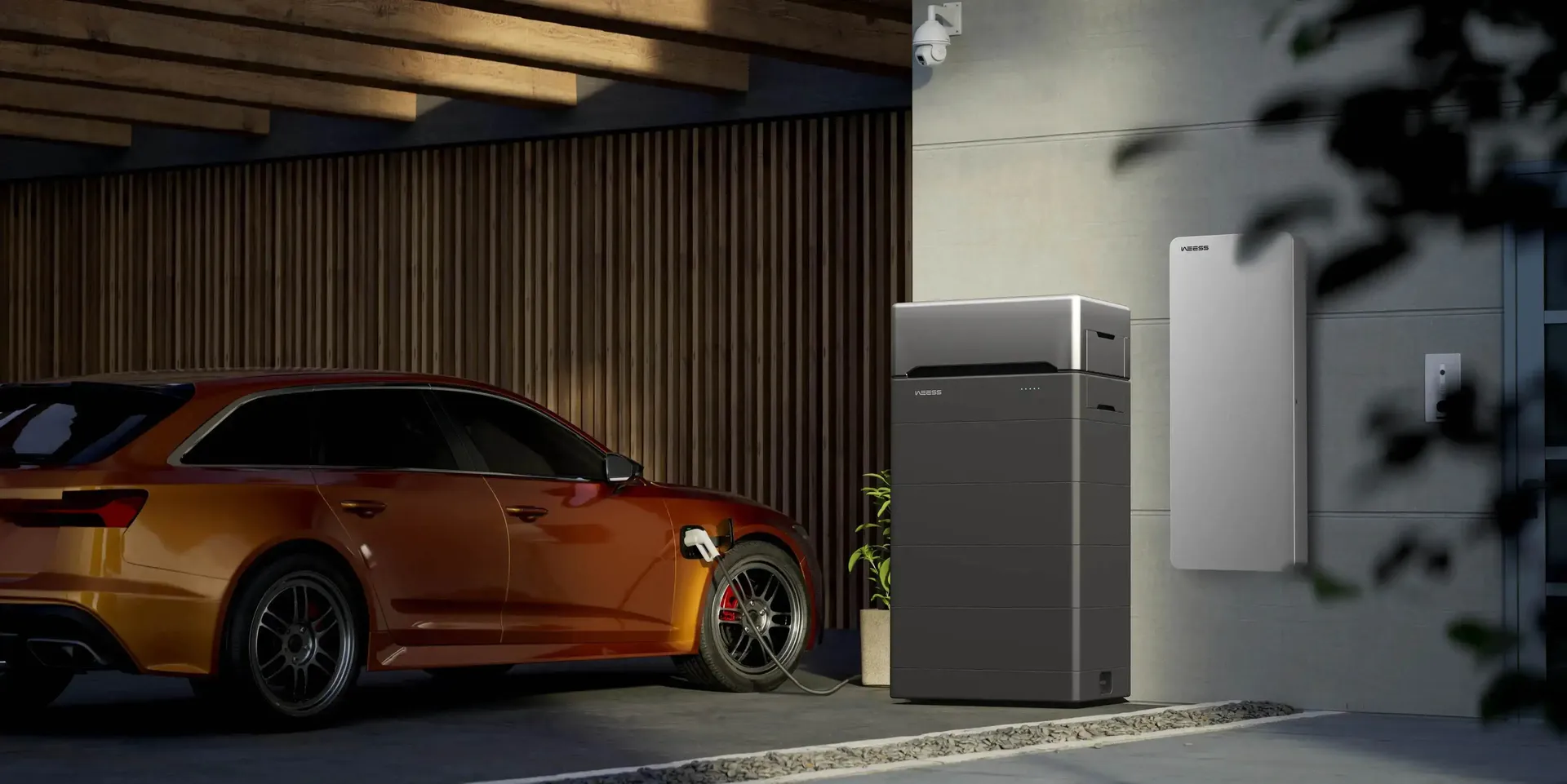
Industry under power: Why energy storage is becoming the new infrastructure for businesses
The energy supply for industrial and commercial enterprises is undergoing a period of fundamental transformation. Rising electricity prices, volatile markets, grid charges and increasing pressure to decarbonise mean that energy is no longer merely an operating cost factor — but is increasingly becoming a strategic resource.
At the same time, the technological landscape is changing: battery storage is evolving from a complementary technology into a key infrastructure component for businesses.
For many businesses, therefore, the question no longer arises as to whether whether not just when energy storage makes sense, but when.
Energy prices and service costs as key drivers
Industrial companies face several challenges at once:
-High peak loads and rising grid charges
-Fluctuating electricity prices on the spot market
-Integration of in-house photovoltaic systems
-Requirements for CO₂ reduction
-Security of supply for critical processes
Peak demand in particular can incur significant costs, as grid tariffs are often linked to maximum load values. At the same time, the increasing volatility of electricity prices means that energy must be procured in an increasingly time-optimised manner.
A new market segment is emerging here: Flexible energy infrastructure at the enterprise level.
Battery storage as an economic lever for businesses
Modern commercial and industrial storage systems (C&I storage) offer businesses several economic benefits at once:
-Peak shaving to reduce grid charges
-Shifting load to periods with lower electricity prices
-Increasing the self-consumption rate for PV systems
-Hedging against electricity price volatility
-Backup and resilience functions
- Stabilisation of internal energy supply
As a result, energy storage is evolving from a purely technical solution into a tool for cost optimisation, risk minimisation and strategic energy planning.
From individual products to a modular energy platform
As the market evolves, so too does the technology architecture. Whilst earlier storage solutions were often developed on a project-by-project basis, modular systems that are standardised, scalable and quick to install are becoming increasingly prevalent.
These systems combine:
-Battery systems
-Power electronics (PCS)
-Security mechanisms
-Cooling
-Energy management systems (EMS)
in integrated units that can be expanded as required.
WEESS Bodensee: Compact C&I storage solution for commerce and industry
With the WEESS Bodensee 232 An all-in-one storage system has been developed specifically for industrial and commercial applications.
The system offers:
-232 kWh storage capacity
-100 kW capacity
-400 V AC integration
-Peak shaving and load shifting functions
-Island mode and backup capability
-Operating temperatures from −20 to +50 °C
Typical areas of application include manufacturing facilities, shopping centres, charging infrastructure and data centres.
Thanks to its compact design, the system is particularly suitable for companies wishing to optimise their energy flows whilst simultaneously improving security of supply.
A reference project in Denmark, for example, demonstrates the integration of photovoltaics with battery storage in an industrial setting to optimise dynamic electricity prices.
Nordsee 4472: Energy storage in the megawatt-hour range for infrastructure projects
Whilst compact systems are primarily used in the commercial sector, containerised storage solutions in the megawatt-hour range are becoming increasingly important.
With the WEESS Nordsee 4472 features a containerised energy storage system with approximately 4.47 MWh capacity per unit which can be used for industrial applications, energy projects and scalable infrastructure.
The systems integrate:
-Battery systems
-Power electronics
-Liquid cooling
-Energy management
-Communication interfaces (e.g. Modbus / OPC UA)
in pre-configured container solutions that can be expanded in a modular fashion.
This creates a new category of energy infrastructure that can be used in both industrial projects and grid-related applications.
Cost-effectiveness: From cost-cutter to strategic asset
The economic benefits of energy storage systems stem from several factors acting simultaneously:
-Reduced operating costs
-Optimised electricity procurement
-Increased self-consumption rate
- Mitigation of production risks
-Energy price hedging
For many companies, a storage system can not only reduce costs but also improve planning and competitiveness.
Energy is thus increasingly becoming a controllable factor of production.
A market with strong growth potential
Several developments suggest that the market for industrial energy storage will grow significantly in the coming years:
1. Increasing volatility in electricity prices
2. Grid charges and infrastructure costs
3. Expansion of renewable energy
4. Industry decarbonisation requirements
5. Technological integration of storage and energy management
Companies are increasingly evolving from mere energy consumers into active participants in a flexible energy system.
Outlook: Additional revenue models through flexible energy systems
In addition to traditional cost savings, new business models are becoming increasingly important. Larger storage systems may also generate additional revenue in the future, for example through:
-Participation in flexibility markets
-Network services
-Electricity market optimisation
-Virtual power plant structures
In the long term, energy storage is thus evolving not only into a cost-optimisation tool, but also into a potential source of revenue.
This development is expected to play a crucial role in industrial and energy projects in the coming years.
Conclusion: Energy storage as a building block of industrial transformation
The energy supply for businesses is facing a structural transformation. Energy storage systems are increasingly becoming a central component of modern energy infrastructure.
System solutions such as WEESS, Bodensee and Nordsee demonstrate that scalable storage technology is now both economically and technically viable — from commercial operations to energy infrastructure on a megawatt-hour scale.
For businesses, the question is therefore no longer whether energy storage will become relevant — but rather how soon it will be adopted.