

Intersolar Europe 2026: Residential Energy Storage Trends in Germany
Explore the future of residential energy storage in Germany after Intersolar Europe 2026. Discover how intelligent EMS, simplified installation, digital management, and smart battery systems are transforming homes and Mieterstrom projects.
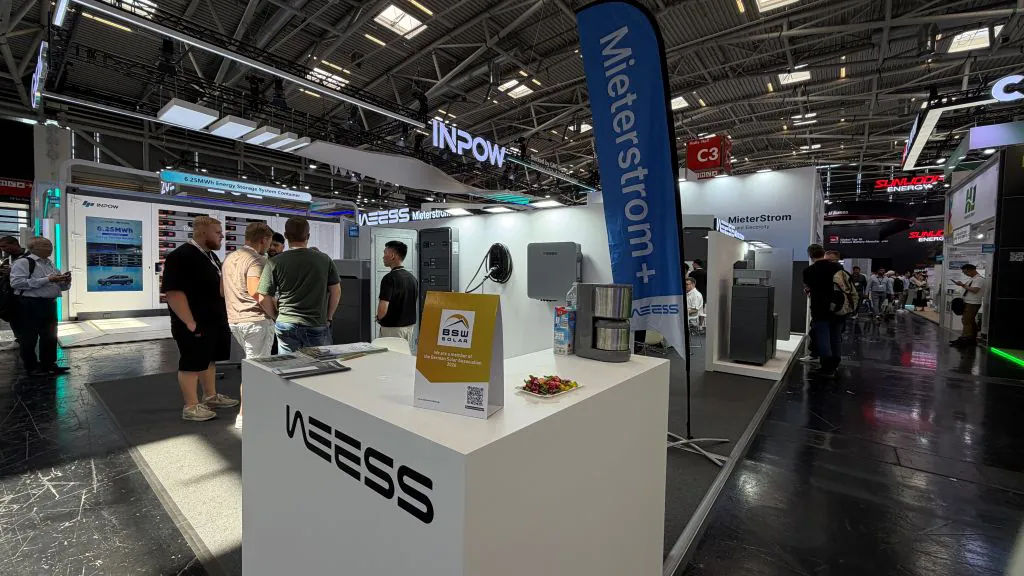
Intersolar Europe 2026: The Future of Residential Energy Storage in Germany
The energy transition is entering a new phase.
For many years, solar photovoltaics were primarily focused on one objective: generating clean electricity. Today, the conversation has fundamentally changed. The question is no longer only how much electricity a building can produce, but how intelligently that electricity can be managed, stored, and used.
At Intersolar Europe 2026, one of the world's leading exhibitions for solar energy and energy storage technologies, this transformation became increasingly visible.
The future of residential energy is moving beyond individual components. Solar panels, batteries, electric vehicles, heat pumps, and electricity markets are becoming interconnected parts of a single intelligent energy ecosystem.
The residential battery is no longer simply a device that stores surplus solar energy.
It is becoming the foundation of the modern smart home.
For Germany, this development is particularly important. As renewable energy penetration increases, households and residential buildings are looking for solutions that provide:
greater energy independence,
lower electricity costs,
simplified operation,
improved grid flexibility,
and long-term sustainability.
At the same time, installers, property owners, and energy service providers face new challenges. Traditional energy solutions often involve complex installation processes, high administrative effort, and ongoing operational costs.
The next generation of residential energy storage must therefore achieve more than technical performance.
It must be:
Simple to install.
Intelligent to operate.
Economical to manage.
Ready for the future.
The Evolution of Residential Energy Storage in Germany
The role of batteries in residential energy systems has changed significantly over the past decade.
Phase 1: Increasing Solar Self-Consumption
In the early stage of residential photovoltaics, the main goal was straightforward:
Generate electricity during the day and use as much of it as possible within the household.
However, solar generation and household consumption often do not happen at the same time.
Solar production usually reaches its peak around midday, while residential electricity demand often increases in the evening.
Battery storage solved this mismatch by allowing households to store excess solar energy and use it later.
This created the first generation of residential energy storage:
PV + Battery
Phase 2: Intelligent Energy Management
As battery adoption increased, another challenge became clear:
Simply storing electricity is not enough.
A truly efficient system must understand when electricity should be stored, when it should be consumed, and when grid interaction creates the greatest value.
This led to the development of intelligent Energy Management Systems (EMS).
Modern EMS platforms analyze:
solar production,
household consumption,
battery state of charge,
electricity prices,
weather forecasts,
and future energy demand.
The system can then automatically optimize charging and discharging decisions.
The result is a smarter energy flow:
PV + Battery + EMS
Phase 3: The Intelligent Energy Platform of the Future
The next evolution is already emerging.
The future home will not operate as an isolated electricity consumer.
Instead, it will become an integrated energy hub connecting:
photovoltaic generation,
battery storage,
electric vehicle charging,
heat pumps,
smart appliances,
dynamic electricity tariffs,
and future grid services.
The battery becomes the central connection point between all these elements.
The future architecture will be:
PV + Battery + EMS + Smart Home + Energy Market Integration
This is why residential storage should no longer be viewed as an optional add-on to solar systems.
It is becoming a fundamental part of the building infrastructure.
Why Residential Energy Storage Is Becoming Essential in Germany
Germany has one of Europe's most advanced renewable energy markets. However, increasing renewable generation also creates new challenges.
Solar energy production is naturally dependent on weather and time of day.
During sunny periods, large amounts of solar electricity can enter the grid.
During evening hours, when households require more electricity, solar generation decreases significantly.
Residential storage helps solve this imbalance by bringing flexibility directly into buildings.
A battery system enables households to:
Increase Energy Independence
By storing locally generated solar electricity, homeowners can reduce their dependence on electricity purchased from the grid.
This provides greater control over energy costs and improves resilience against future price fluctuations.
Reduce Electricity Costs
With intelligent control strategies, batteries can optimize electricity usage by:
storing excess solar energy,
reducing peak-hour grid consumption,
and preparing for dynamic electricity pricing models.
Support Future Energy Markets
As electricity markets become increasingly flexible, residential batteries may play an active role beyond individual households.
Connected storage systems can contribute to:
demand response,
grid balancing,
virtual power plants,
and energy communities.
The home of the future will not only consume energy.
It will actively participate in the energy system.
The Challenge: Making Residential Energy Systems Easier to Deploy
While the market opportunity is clear, one major challenge remains:
Complexity.
The energy transition requires millions of additional residential installations. However, complicated installation procedures and high administrative requirements can slow down adoption.
For installers and project developers, efficiency is becoming increasingly important.
A successful residential energy solution must reduce unnecessary complexity throughout the entire project lifecycle:
From installation.
To registration.
To daily operation.
To long-term maintenance.
This is especially relevant for multi-family housing projects and Mieterstrom models.
Traditional approaches often require significant planning effort, complex metering structures, and ongoing administrative management.
To accelerate the next phase of residential energy adoption, the industry needs solutions that are designed for scalability.
Why Traditional Mieterstrom Models Are Difficult to Scale
Mieterstrom has long been considered one of the most promising concepts for increasing renewable energy usage in multi-family buildings.
The idea is simple:
Generate solar electricity locally and provide it directly to residents within the building.
This creates multiple benefits:
Residents can access locally generated renewable electricity.
Building owners can increase the value of their properties.
Solar energy can be consumed closer to where it is generated.
Renewable energy adoption can expand beyond single-family homes.
However, despite its potential, the widespread adoption of Mieterstrom has faced practical challenges.
The issue is not the concept itself.
The challenge lies in implementation.
For many projects, the complexity of installation, metering, registration, and ongoing administration creates significant barriers.
1. Installation Complexity
Traditional approaches often require extensive electrical planning and modifications.
Depending on the building structure, installers may need to deal with:
complicated meter cabinet configurations,
additional electrical components,
complex wiring requirements,
longer installation periods,
and increased coordination between different parties.
Every additional technical requirement increases project complexity.
For installers, this means:
more planning time,
higher labor costs,
and reduced project scalability.
For property owners, it can mean:
longer implementation timelines,
higher investment requirements,
and greater uncertainty.
As the demand for residential energy solutions grows, simplicity will become a decisive factor.
The future of energy systems cannot depend on complicated installation processes.
2. Administrative Effort
A successful residential energy project does not end after installation.
The daily operation of a Mieterstrom system requires efficient management.
Operators need to handle:
energy consumption tracking,
resident management,
electricity allocation,
invoice generation,
customer communication,
and system monitoring.
Without digital support, these tasks can become time-consuming and expensive.
A solution that produces renewable energy but creates excessive administrative workload does not fully solve the customer's problem.
The future requires energy systems that are not only technically advanced but also operationally simple.
3. Long-Term Operating Costs
Another important factor is the ongoing cost of managing energy systems.
Some solutions depend on continuous software subscriptions, external service providers, or additional management fees.
Over the lifetime of a battery system, these recurring costs can significantly influence the overall economic performance.
For property owners and operators, the question is becoming increasingly important:
How can we create a residential energy solution that remains efficient and economical over many years?
A New Approach: Making Residential Energy Projects Simpler
The next generation of residential storage solutions needs a different approach.
Instead of adding more complexity, technology should remove complexity.
The goal should be:
A system that installers can deploy efficiently.
A platform that operators can manage easily.
A solution that residents can use intuitively.
This principle guides the development of our residential energy storage solution.
We believe that successful energy systems should combine hardware reliability with digital simplicity.
Simplified Installation Through Behind-the-Meter Integration
One of the key advantages of our system is its simplified installation concept.
Unlike traditional approaches that may require extensive modifications to existing electrical infrastructure, our solution is designed for direct integration behind the meter cabinet.
This means:
no reconstruction of the meter cabinet is required,
installation can be completed more efficiently,
existing building infrastructure can be utilized,
and project preparation becomes significantly easier.
For installers, this creates a more predictable installation process.
For property owners, it reduces complexity and helps accelerate project implementation.
In a market where skilled electricians are increasingly in demand, installation efficiency is becoming one of the most important factors for successful energy deployment.
Simplified Registration with Messkonzept 2
Regulatory compliance is another important consideration in the German energy market.
Energy projects require solutions that fit into existing regulatory frameworks while remaining practical for real-world applications.
Our system supports implementation based on Messkonzept 2, providing a structured approach for residential energy projects.
By simplifying technical integration and registration processes, the system helps reduce administrative barriers and enables faster project realization.
The objective is clear:
Make renewable energy solutions easier to implement without unnecessary complexity.
Digital Management: The Key to Scalable Mieterstrom
Technology alone does not create a successful energy project.
A truly scalable solution requires intelligent digital management.
This is particularly important for multi-unit residential buildings, where one energy system may serve many different users.
A modern platform should provide complete visibility and control.
Our free application provides centralized system management, allowing operators to monitor energy performance and manage connected users through one digital interface.
The platform enables:
Real-Time System Monitoring
Operators can view system performance and energy flows at any time.
Important information such as:
solar generation,
battery status,
household consumption,
and energy usage patterns
can be monitored conveniently.
Automated Billing Management
One of the biggest challenges in Mieterstrom projects is administrative workload.
Manual billing processes require time and increase the possibility of errors.
Our integrated billing system allows automated calculation and management of resident electricity usage.
The system can generate bills and send them to residents according to predefined schedules.
This significantly reduces daily administrative effort.
Instead of managing spreadsheets and manual calculations, operators can focus on their core business.
Lower Management Requirements
A scalable energy solution should not require a large operational team.
By combining:
intelligent software,
automated processes,
centralized monitoring,
and digital billing,
our system helps minimize ongoing management requirements.
This makes residential energy projects more attractive not only for homeowners but also for:
property developers,
housing associations,
energy service companies,
and installers.
No Recurring Platform Fees: Designed for Long-Term Value
Energy systems are long-term investments.
A battery installed today may operate for more than a decade.
Therefore, the economic model behind the technology is just as important as the hardware itself.
We believe customers should benefit from transparent and predictable costs.
Our solution provides access to the digital management platform without recurring platform fees.
This approach supports long-term project economics by avoiding unnecessary ongoing software expenses.
For property owners and operators, this means:
clearer financial planning,
reduced operating costs,
and improved return on investment.
The future of residential energy should not be built on increasing complexity and additional fees.
It should be built on efficient technology that creates lasting value.
Intelligent EMS: The Brain of the Future Energy Home
A battery stores energy.
But an intelligent energy system understands energy.
This distinction will define the next generation of residential storage.
As homes become increasingly electrified, energy management becomes more complex. A modern household may include:
photovoltaic generation,
battery storage,
electric vehicle charging,
heat pumps,
household appliances,
dynamic electricity tariffs,
and future energy services.
Without intelligent coordination, these systems cannot reach their full potential.
This is where the Energy Management System (EMS) becomes essential.
The EMS acts as the intelligence layer connecting all energy components within the building.
Real-Time Optimization Instead of Fixed Charging Strategies
Traditional energy systems often rely on simple charging rules.
For example:
“Charge the battery when solar power is available.”
However, future energy management requires much more advanced decision-making.
An intelligent EMS continuously evaluates multiple factors:
current household electricity consumption,
photovoltaic production,
battery state of charge,
electricity prices,
expected energy demand,
and grid conditions.
Based on this information, the system automatically determines the most efficient strategy.
For example:
During periods of high solar generation, the system can prioritize battery charging.
During periods of high electricity prices, stored energy can be used to reduce grid consumption.
When dynamic tariffs become more widespread, the system can adapt charging behavior according to electricity market conditions.
The result is a continuously optimized energy flow without requiring users to manually control the system.
From Energy Storage to Energy Intelligence
The future homeowner does not want to become an energy manager.
They want technology that works automatically.
This is the fundamental purpose of intelligent EMS.
A successful energy system should provide:
maximum efficiency,
simple operation,
transparent information,
and automatic optimization.
The role of the user changes.
Instead of managing individual devices, homeowners simply benefit from a system that continuously improves energy utilization.
This is the foundation of the future smart home.
Reliability: The Foundation of Long-Term Energy Investment
Residential energy storage is not a short-term purchase.
It is an investment designed to operate for many years.
For homeowners, property owners, and energy operators, reliability is therefore one of the most important decision factors.
A high-quality storage system requires more than advanced software.
It requires:
dependable hardware,
professional technical support,
long-term service capability,
and confidence throughout the entire product lifecycle.
Our battery systems are backed by a 10-year warranty, providing customers with long-term security and confidence.
However, reliability is not only measured by warranty periods.
It is also reflected in the support provided after installation.
Customer Support Beyond Installation
The relationship between technology providers and customers should not end after commissioning.
Energy systems operate in real-world environments where questions, adjustments, and technical support may occasionally be required.
Our goal is to provide professional assistance throughout the entire system lifecycle.
We support:
installers during project implementation,
partners during operation,
and customers throughout daily usage.
We believe that excellent technology requires excellent service.
The energy transition is a long-term journey, and every successful project depends on strong cooperation between manufacturers, installers, and users.
The Future Vision: Every Building Becomes an Intelligent Energy Hub
The energy system of tomorrow will look fundamentally different from today's model.
A traditional building was primarily an energy consumer.
Electricity came from the grid, and users had limited influence over how energy was produced or managed.
The future building will become an active participant in the energy system.
It will:
generate renewable electricity,
store energy intelligently,
optimize consumption,
interact with electricity markets,
and support grid flexibility.
The battery will become the central infrastructure connecting these functions.
Just as internet connectivity became essential for modern buildings, intelligent energy management will become a fundamental requirement for future homes.
We believe residential energy storage will become a standard component of every modern building.
Not simply as a backup solution.
Not only as a way to reduce electricity costs.
But as the foundation of a smarter, more sustainable, and more independent energy future.
Our Perspective: Building the Foundation of Future Homes
At our company, we believe the future of residential energy is built on four essential principles.
1. Simplicity
Energy solutions must be easy to install and easy to operate.
Complex technology should simplify people's lives—not make them more complicated.
By reducing installation barriers and improving digital management, we help accelerate the adoption of renewable energy.
2. Intelligence
Energy systems must actively manage themselves.
Through intelligent EMS technology, our solution continuously adapts to real-time energy conditions and optimizes performance automatically.
3. Sustainability
A successful energy system must deliver value over its entire lifecycle.
Long-term reliability, transparent operating costs, and professional service are essential for sustainable energy solutions.
4. Future Readiness
The energy landscape will continue to evolve.
New electricity markets, smart homes, electric mobility, and distributed energy networks will create new opportunities.
Our systems are designed to provide the foundation needed for these future developments.
Conclusion: The Future of Residential Energy Storage Starts Now
Intersolar Europe 2026 demonstrates a clear direction for the industry:
The future of residential energy storage is not only about bigger batteries.
It is about smarter systems.
It is about simpler installation.
It is about digital management.
It is about creating energy solutions that are accessible, scalable, and ready for the next generation of homes.
For Germany's energy transition to succeed, residential storage must become easier for installers, simpler for operators, and more valuable for users.
We believe that every building of the future will require an intelligent energy platform.
A platform that connects renewable generation, storage, consumption, and the energy market.
Our mission is to provide the foundation for this future.
Because tomorrow's smart home does not start with more technology.
It starts with better-connected technology.